


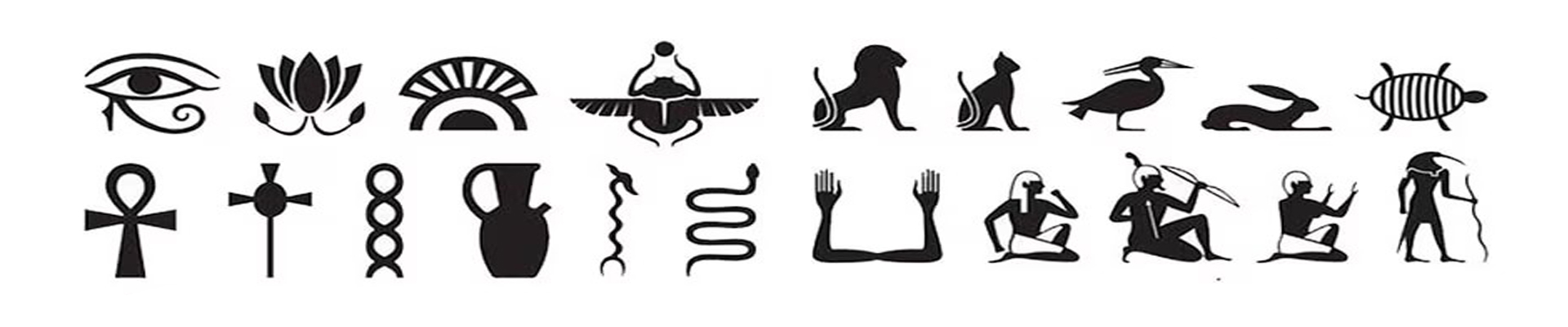
Egyptian hieroglyphic symbols are among the most well-known historical instances of symbolism. This was the official writing system used by the ancient Egyptians.
Ancient Egyptians used a variety of pharaonic symbols in their daily rituals and everyday life. Additionally, because these symbols have significant meanings in the history of the Pharaohs, it was necessary to address the Egyptian creativity in the manufacture and use of symbols as well as his clear reliance on them in various spheres of his life. These spheres include social, religious, cultural, and recreational areas.
The Egyptian symbols, which include the Ankh, the Lotus flower, and the soul and spirit, typically refer to religion, daily life, death, and love as well as to power and weakness. Ka and Ba.
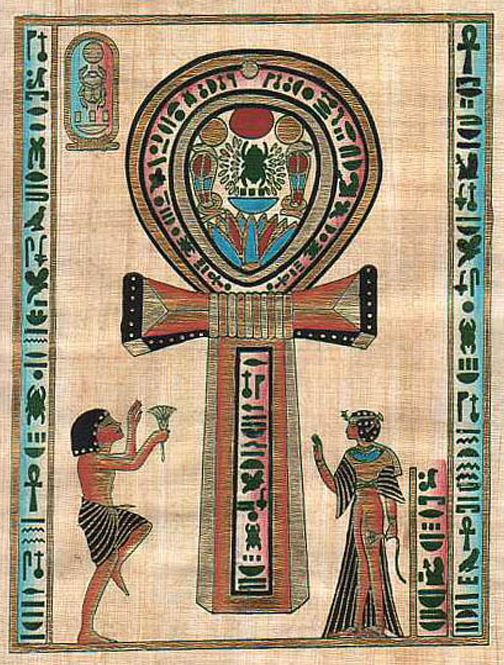
In ancient Egypt, the ankh was a very important emblem. As “the key of life” in English, its
hieroglyphs literally mean “eternal life,” and they have long been linked to royal or
high-ranking priest ceremonies intended to provide eternal life on Earth. The overall etymology
of the hieroglyphs that make up this particular sign translates to terms like Khepera (to
become), which is considered to represent ideas from Earth’s material plane manifesting
themselves on the material world. It can be observed in a lot of dynastic-era artworks. They
frequently depict funeral rites and Osiris, who had a long-standing belief in the continuation
of fertility after death.
One of the most well-known ancient Egyptian symbols is the hieroglyph Ankh, usually spelled Anj,
which stands for eternal life. One of the most often used hieroglyphs, it is always used to
refer to the gods in Egyptian writing and art. The gods, in the eyes of the Egyptians, were
responsible for ensuring eternal life. The Ankh became regarded as the “Egyptian emblem of
death” because pictures of their gods wearing it reflected their control over both life and
death. The hands of the gods were frequently depicted clutching an ankh by its knot. The gods
are frequently seen at the bottom end of the scale with their arms crossed and an Ankh in each
hand.
Images of a god holding the Ankh close to their lips are also common at various pharaohs. This
stands for the breath of life, a gift from the gods that is necessary for life after death. The
Ankh was considered by the Egyptians to be a charm that would protect them. Mirrors in the shape
of an ankh were also made by them to signify how birth and death have mirrored one another.
Even though it is one of the most well-known Egyptian symbols, there are a number of competing
theories on how it came to be. As a symbol of their faith, Coptic Christians later adopted a
variation of the Ankh cross.
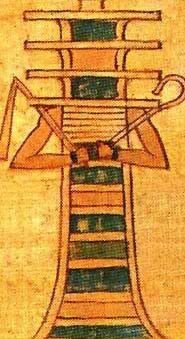
The Djed Pillar is one of the first symbols of Egypt in Egyptian mythology. It stands for
strength and stability and is associated with Ptah, the god of creation, and Osiris, the god of
death. Because of its association with the god Osiris, this sign is also referred to as Osiris’
backbone. Egyptians were fond of wearing amulets shaped like Pilar Djed’s symbol. These belonged
to both the live and the dead, and in the latter case, they were placed close to the spine. On
the bottom of the coffins, precisely where the deceased’s spine would be placed, it was also
common to engrave the form of the Pilar Dyed.
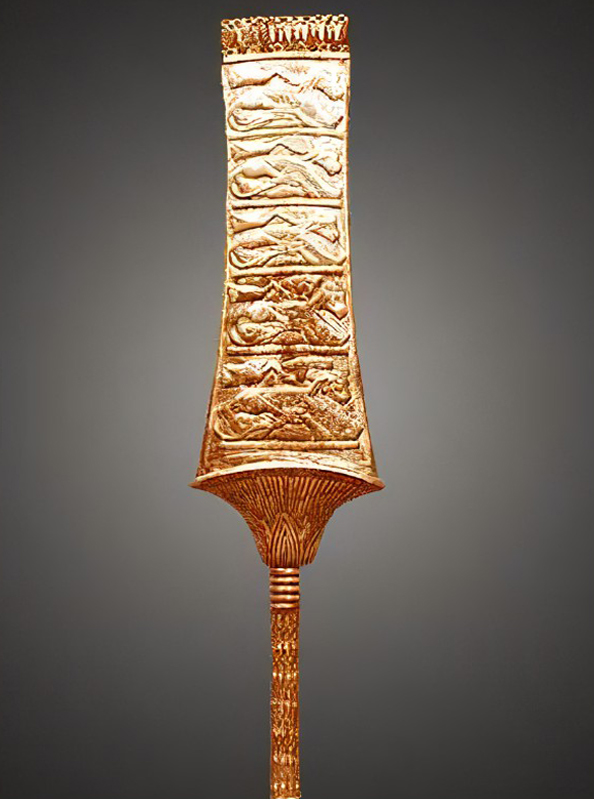
The Egyptian sceptre Uas, often called was, was a symbol of dominance and power. It was frequently displayed in the hands of a king or a deity. The symbol for this was a sceptre with a forked base. Usually, the top of it was adorned with the head of some supernatural being.
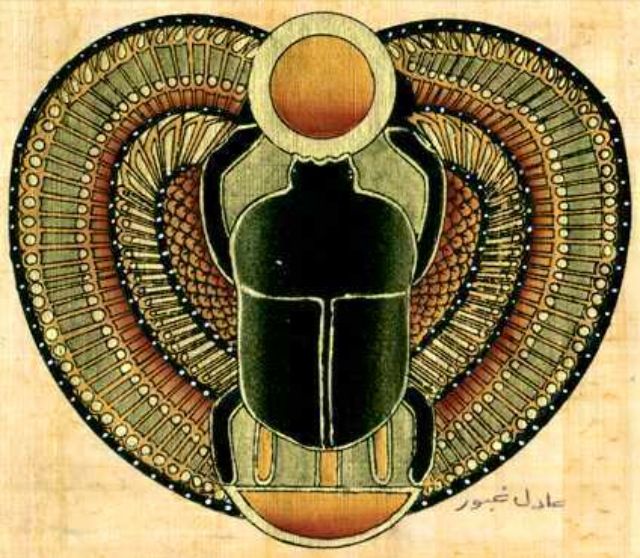
Ancient Egyptians used the scarab beetle as a symbol for the sun god Jepri, who is said to be one of the many incarnations of the sun god Ra. In dung balls, dung beetles lay their eggs, which they then bury in a hole in the ground. The Egyptians related this characteristic to that of the god Jepri, who is reborn as the Sun every day, and came to believe that these beetles were self-producing as a result. As a result, in Egyptian culture, the beetle represents the rising Sun.
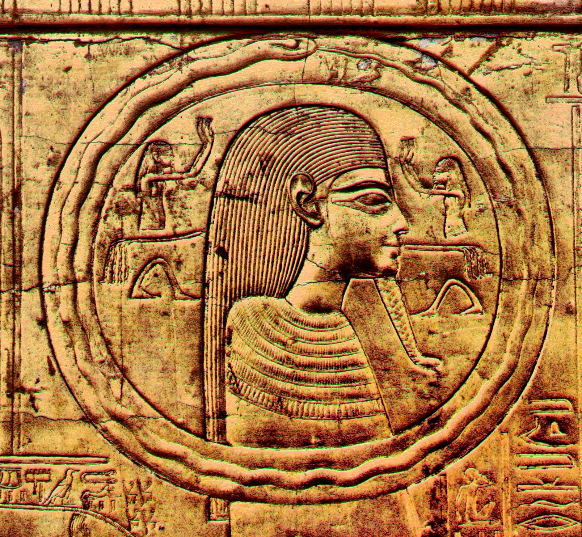
The ouroboros, one of the most recognisable symbols in the world, is Egyptian in origin. Based on a phenomenon that happens in the nature, it is a snake biting its own tale. The image, which depicts the sun, embodies concepts like rebirth, perpetuity, recreation, and infinity. It came to symbolise the cyclical nature of the cosmos, the emergence of life from death and the formation of new life.
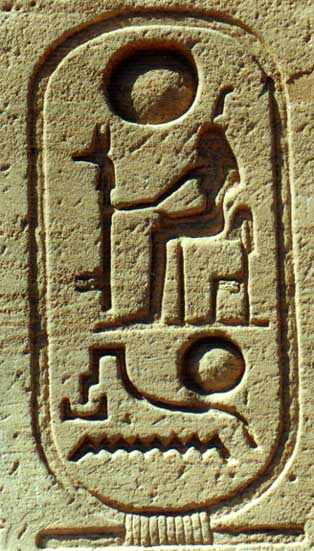
The cartouche emblem is fashioned like an oval with a bar underneath and hieroglyphs in the centre. The line underneath the hieroglyph is said to indicate the location where the rope is tied together, and the circle around it is thought to depict a magical rope. The sun, which stood in for the king’s control over the universe, is represented by the rope circle as enclosing everything.
In ancient Egypt, pharaohs’ tombs featured cartouches. Egyptians held the view that if a person’s name was preserved after death, they would not vanish. The cartouche served as a distinguishing mark. Some pharaohs wore them to stave off misfortune and entice good karma. After death, the oval around their name served as a barrier against evil spirits.
At several points in Egyptian history, the names were omitted from the cartouche because the populace thought that if someone acquired a cartouche bearing their name, they would be able to govern the person whose name was on the cartouche. 2800–2700 BC saw their introduction into use in Ancient Egypt. In 2600–2500 BC, they started to become common.
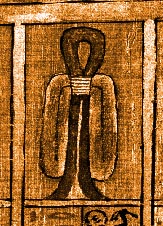
This ancient Egyptian symbol, also referred to as the Knot of Isis, honours the goddess, Isis. Unknown Egyptian symbol has some geometrical similarities to the Ankh sign. Due to the Tyet’s alleged representation of life and wellbeing, its symbolism is similar to that of the Anj. Because it resembles the knots used to fasten the goddesses’ robes together, the Isis knot earned its name. This symbol is usually observed with Pilar Dyed, the representation of the god of death Osiris. This shared portrayal has been viewed by some academics as proof of the life-death dualism.
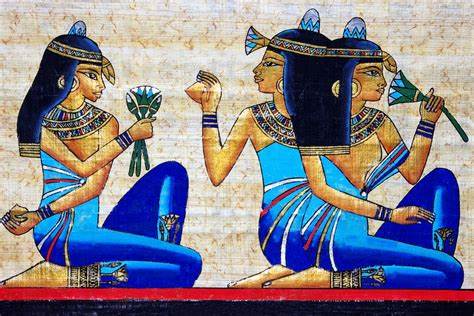
In ancient Egypt, the lotus blossom was revered as a sacred plant and was portrayed in temples and pyramids. The flower is said to be connected to the formation of the universe and the god Vishnu, whose navel a lotus flower emerged and from which another deity, Brahma, the creator of the cosmos and life, sprang. In accordance with another legend, the sun god Horus was thought to have been created from a lotus blossom.
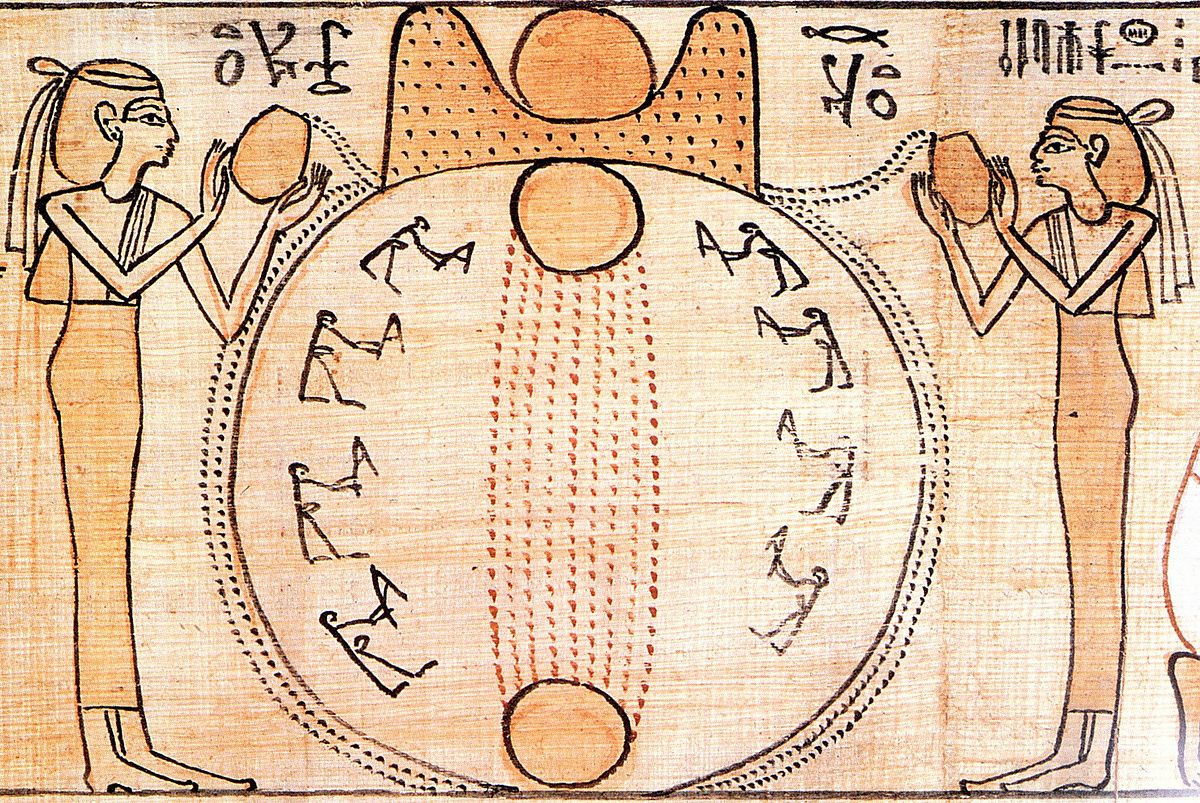
The Shen ring, which resembles a circle with a tangent line representing a knotted rope, is a symbol of security and longevity. This Egypt icon is known as Shen, which is the Egyptian word for “surround.” On some occasions, this sign was drawn in a longer shape to resemble a cartridge that contained the names of pharaohs. This was done to demonstrate that Shen, the pharaoh’s ring, would always guard him.
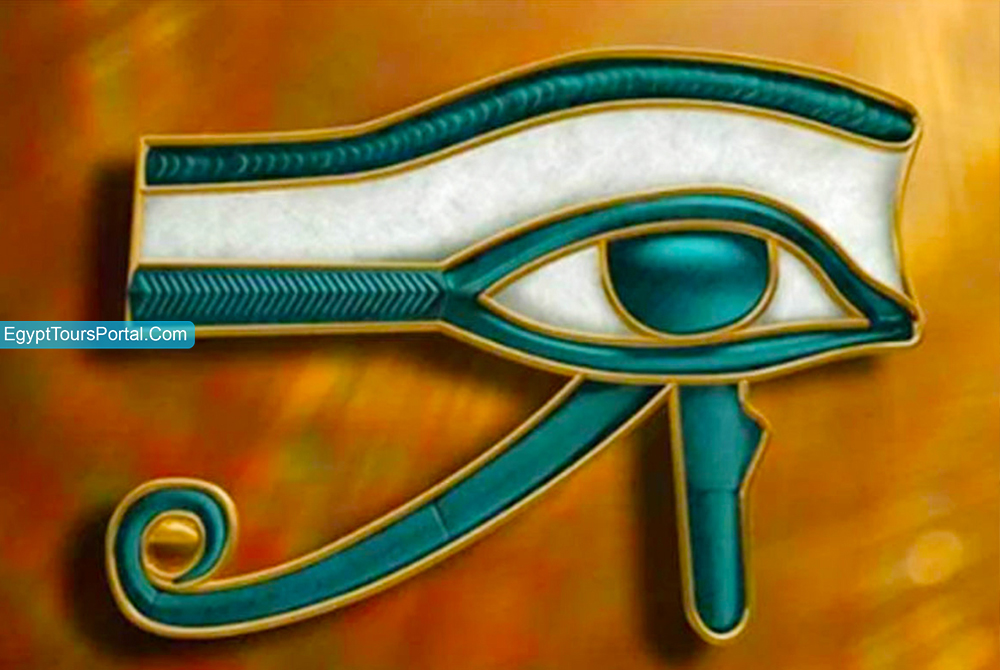
Ancient Egyptians used the Eye of Horus as a symbol of protection, well-being, and restoration.
Ancient Egyptians used the Eye of Horus as a symbol of security and good health. The insignia was influenced by Horus, a heavenly being who is sometimes shown as a hawk or as a man with a hawk’s head. The father of Horus, Osiris, was killed by Seth, according to Egyptian mythology. In a series of conflicts with Seth, Horus pursued justice and suffered the loss of his left eye. Horus’ eye was healed by Tot, the god of magic and wisdom, who later gave it to Osiris in exchange for Horus’ life. As a result, the eye of Horus can stand for atonement, recovery, and safe haven. The two eyes of Horus have a particular significance in Egyptian mythology.
His left eye was historically connected to the Moon, while his right eye was connected to the Sun. The right eye was referred to as the Eye of Ra because Ra was the Sun God, and the left eye was known as the Eye of Horus. The two eyes represent the same ideas even though they are separate Egyptian symbols. Amulets in the form of Horus’ eye were frequently fashioned as funeral talismans by the Egyptians.
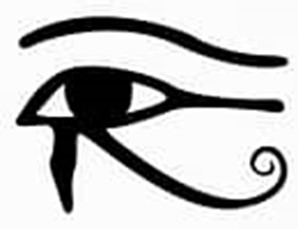
The eye symbol that we see everywhere is undoubtedly one of the first that comes to mind when one thinks of ancient Egyptian symbols. However, we must exercise caution because it is simple to conflate the Eye of Ra with the Eye of Horus (also known as the Egyptian Eye).
An ancient Egyptian sign used to represent the goddess thought to be the feminine counterpart of the sun god, Ra, is the Eye of Ra, also known as the Eye of Re or Rah.According to legend, the Eye of Ra is a violent power that employs force to subdue and manipulate its adversaries.
The eye can personify several Egyptian goddesses, including Mut, Bastet, Hathor, Wadjet, and Sekhmet, despite the fact that it is an extension of Ra and related with the disk-shaped sun.The sun god is seen as having the eye goddess as his mother, daughter, sister, and companion. She participates with him in the creative cycle, following which he is reborn each morning. Ra is defended by the violent elements of his eye against any agents of disorder that attempt to usurp his kingdom.These features of the eye goddess are frequently shown by a cobra or lioness, which are representations of regal power and protection.
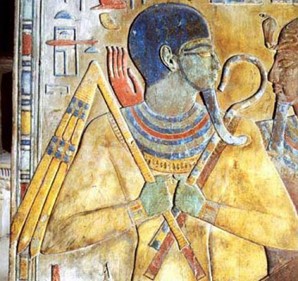
The crook and the flail are viewed as representations of the authority of the state as well as the king’s unquestionable right to rule, dominate, and govern his subjects. Hekha is an epithet of Osiris and means “to govern.” Each and every king and queen who ever governed Egypt held the emblem in their hands. While the failure was used for harvesting and herding goats, the crook was an antique instrument employed by shepherds. They served as a symbol of tradition’s value and a reminder of the past.